Hip-Hop Grows Up: Why Generational Clashes Can’t Stop the Culture From Evolving
Clashes between “old heads” and the new generation reveal deeper questions about authenticity, legacy, and evolution — but the genre’s power lies in its ability to hold all eras at once.
Keith Nelson Jr.KeithNelson Jr.Keith Nelson Jr. is a journalist who has covered hip-hop, technology, and movies/TV for VIBE, Revolt, Digital Trends, Flaunt Magazine, and more. Follow him @JusAire
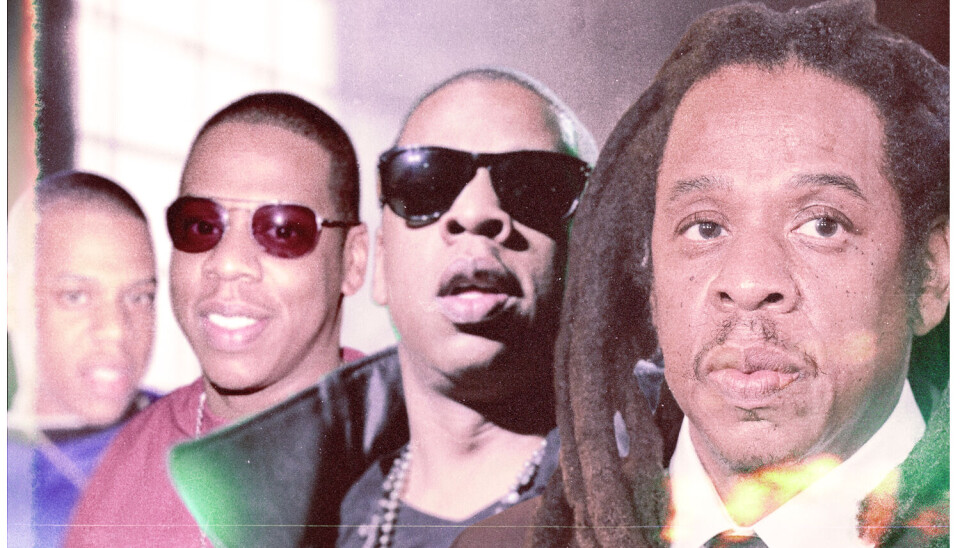
Photos by Al Pereira, SGranitz, Kevin Winter, and Gilbert Flores. Photo illustration by Okayplayer.
Time is supposed to be uncomfortable because your time is never yours alone. You might get your dream job by 26, the perfect marriage by 30, and become a millionaire by 35, just like you predicted on your vision board when you were an 18-year-old college student. Unfortunately, you have no control over your high school being torn down, or your younger nephews calling you a boomer for knowing every word to “Thong Song” or “Juicy.” Aging is often a difficult reconciliation of where you came from and where the world’s going. And this struggle is never more present than in hip-hop.
Younger artists have an appetite for their slice of history. Older artists don’t want their legacies or the hip-hop they grew up with to be cannibalized by that hunger. Therein lies the source of most intergenerational strife: ownership. Every generation feels hip-hop is theirs to shape. You can’t tell NBA Youngboy he doesn’t know what hip-hop is any more than you can tell Nas.
Hip-hop’s at this interesting stage where the “old heads” and the “YNs” are having somewhat heated conversations about what’s really relevant — but the truth is, the culture’s growing in ways that make that split less clear. Rappers are able to have successful careers well into their 40s. Younger rappers can still find innovative sonic twists on a 50-plus-year-old art form, and the fans benefit from it all. Unfortunately, the relationship between generations is not that easy to simplify.
One of the most enduring fallacies in hip-hop is that the genre is a young man’s sport. In the earlier days of hip-hop’s lifespan, it was true. Big Daddy Kane, LL Cool J, KRS-One, Queen Latifah, Kurtis Blow, Fab 5 Freddy, Rakim, Kurtis Blow: none of them were 35 by the time hip-hop hit its twenties. Between 1990 to 2010, there is a shortlist of rappers aged 35 and up who topped the Billboard Hot 200 album chart: Eminem, Jay-Z, and Common, among others.
Advertisement
In 2001, KRS-One said that “[we] don’t respect our elders.” Ice Cube echoed those sentiments to Vanity Fair in 2010, saying that some “think that because you reach a certain age, you don’t know how to do what you do.” Eminem, then 30, was ironically calling a 37-year-old Benzino a grandfather on his 2002 diss song “The Sauce.”
Hip-hop didn’t become an international commodity until a little over 20 years into its entire existence. Hip-hop artists had been performing overseas since the ‘80s, but during the late '90s and early 2000s, artists began selling millions of records overseas regularly. Hip-hop was initially considered a “young person’s genre” for so long because it grew up alongside its very first fan; there was “no country for old men” because it quite literally did not exist. When one mixes in systemic and institutional ageism in the form of sales figures, cultural relevance, and perceived bank account statements, you have a perfect storm for a genre that values youth at the expense of history.
Then, hip-hop grew up.
Clipse perform on stage during the "Grace for the World" concert, on September 13, 2025 in Vatican City, Vatican.Alessandra Benedetti - Corbis
The 2010s became the first decade in hip-hop history where nine rappers over 35 reached No. 1 on the Billboard 200, and that number has increased throughout the 2020s as more artists like Tyler, the Creator, Big Sean, Gunna, Cardi B, and Young Thug slide into their 30s. 50 Cent’s Final Lap tour celebrated the 20th anniversary of his major label debut album Get Rich Or Die Tryin’, and as of 2024 was the third-ever rap tour to gross $100 million. At 48, Fiddy was still selling out arenas worldwide, fueled by the same tweens and teens who bought his 2003 album — now grown adults with steady jobs and real disposable income.
50 Cent performs on stage during "The Final Lap" tour at Rogers Arena on September 08, 2023 in Vancouver, British Columbia, Canada.Andrew Chin
While a 50-year-old Andre 3000 may believe his rapping at his age “feels inauthentic” because of his mature life experiences (colonoscopies and bad eyesight), hip-hop fans have been debunking that logic for years. Clipse, a duo composed of over-45 rappers, released their first album together in over 15 ½ years, Let God Sort Em Out, scoring their first Top 5 debut on the Billboard Hot 200 since their 2002 debut album, Lord Willin’. They didn’t do it rapping about sciatica and grey hairs; rather, they achieved this by offering both introspective storytelling and Mike Tyson blows to the face. Killer Mike won three Grammy Awards at the age of 48 for his sixth album, MICHAEL, telling the world during his Best Rap Song acceptance speech, “For all the people out there that think you get too old to rap... I don’t care if you’re 78 rapping about how many gals you got in the nursing home.”
Still, some members of the younger generation troll their older predecessors by reducing their careers to a simple nostalgia act. However, the culture is advanced through intergenerational collaborations. Nas reinvigorated his career 25 years after his debut by entrusting the sonic identity for six straight albums to Hit-Boy, a producer 14 years his junior. Cash Cobain shared rumors of a possible new Jay-Z album with the excitement of a kid opening presents on Christmas, and was even more exhilarated when he said that Jay himself called him to debunk those rumors. Ice Spice and Nicki Minaj found common ground in the timelessness of being a fly girl and gave 2023 two hit singles – “Barbie World” and “Princess Diana.”
Hip-hop has created a space for older rappers to thrive longer than they ever have before. However, that doesn’t mean older rappers are quick to accept change as a form of evolution either.
These days, the term “real hip-hop” has become divisive. Seemingly at every turn, legends of yesteryear have been exalting the sound of their era as the best of its kind, while simultaneously disparaging their successors’ own. When the “SoundCloud era” of the late 2010s was producing stars like Lil Yachty and Playboi Carti, the likes of Pete Rock and Eminem were reducing the entire movement to “mumble rap.” As New York City began regaining its cultural prominence on the backs of a drill-inspired sound anchored by Brooklyn talents Pop Smoke and Fivio Foriegn, older MCs like Styles P and Maino denounced it as talentless conduits of murder and beef. Whether it’s Jermaine Dupri thinking all new female rappers sound the same or Fat Joe being against doing a sexy drill song, the generational divide in hip-hop often reveals itself through dismissals rather than dialogue.
This disconnect between older and younger generations is reminiscent of the Ship of Theseus. In the thought experiment, a ship’s rotting planks are gradually replaced until none of the originals remain. The question then arises: is it still the same ship, or something entirely new? And if the original planks were restored, would that make it the true Ship of Theseus again?
Hip-hop's always been entangled in this existential conundrum. Raekwon appeared on the
and vehemently disavowed the notion that the new generation is considered hip-hop, pointing to the fact that his generation learned what hip-hop was from rappers like Big Daddy Kane, Slick Rick, and KRS-One. This came after Public Enemy’s Chuck D toldThe Los Angeles Timesin 1994, a year after Wu-Tang Clan debuted with Enter the Wu-Tang (36 Chambers), that there was “nothing fly” about glorifying the drug trade in music. That brand of gangsta rap was “a trend set up by the record companies and exploited by the record companies,” he surmised.
Without naming him specifically, Chuck, one of the rappers Raekwon said he learned about the genre from, denounced the type of music that would make the Wu-Tang Clan founding member a hip-hop legend.
We now live in a world where both Public Enemy’s It Takes A Nation of Millions To Hold Us Back and Raekwon’s Only Built 4 Cuban Linx are considered hip-hop classics, because no matter the era or how many pieces of hip-hop’s proverbial foundation are replaced, hip-hop has always been an honest reflection of the current state of the world. This is why Travis Scott’s sonic encapsulation of the angst of an irreverent and overstimulated generation on Astroworld is a hip-hop classic, as is Nas’s poetic commentary on the aftermath of the crack cocaine epidemic of the ‘80s on Illmatic. While they are not of the same caliber in any sense, both are indeed different translations of a core hip-hop language of honesty.
Younger artists may be reimagining the sound of hip-hop because it’s the natural progression of culture itself. Yasiin Bey — then known as Mos Def — perfectly explained this in “Fear Not Of Man” on his seminal 1999 album Black On Both Sides:
People be askin' me all the time / ‘Yo Mos, what's gettin' ready to happen with hip-hop?’ / I tell em, ‘You know what's gonna happen with hip-hop? / Whatever's happening with us’ / If we smoked out, hip-hop is gonna be smoked out / If we doin' alright, hip-hop is gonna be doin' alright”
Time waits for no man, woman or genre. Thankfully, hip-hop contains enough multitudes where all ages of rappers can thrive, and as long as the music honestly reflects the world it’ll always be hip-hop.