How The Golden Era of Black Media Made R&B Mainstream
In the ‘90s, musical crossover with hip-hop and prominence in media pushed R&B into the mainstream
Photos by Sal Idriss / Contributor, KMazur / Contributor, KMazur / Contributor, Jeff Kravitz / Contributor, Getty Images.
Since the turn of the 21st century, critics have prophesied that R&B, a once-dominating music genre, is dead. Male artists aren’t professing their love in pouring rain, draped in silk shirts anymore. R&B groups that captured the zeitgeist with choreographed dance moves and stylistic outfits are few and far between. Modern R&B, as we know it today, boasts a distinct sound from its mainstream emergence in the 1990s. While R&B has evolved past its origins with experimentation and outside influences, '90s R&B remains the foundation for the genre today, along with influences in hip-hop and modern-day pop music.
The 1990s are constantly referred to as the golden age within Black media. There was an abundance of Black-led television shows and movies, and Black music genres such as hip-hop and R&B were on the rise. Since the 1940s, music distributors and charting platforms have failed to accurately classify music by Black performers. While we can now look to an encompassing range of music made by Black performers, unconstrained by genre and labels, it was Billboard who mainstreamed the term Rhythm & Blues, replacing the “Black Music” moniker that held space on the charts for most of the 1980s. R&B has always been defined as a genre that is made and written for and by Black people.
Artists like Whitney Houston and Mariah Carey are now known for their crooning R&B ballads, but both artists entered the music industry with pop records, “Thinking About You” and “Vision of Love,” respectively. At the time, record labels discouraged Black artists from making R&B or “Black” music, opting for a more pop-leaning, radio-friendly sound to appeal to a larger audience. Having a predominantly Black audience was seen as regressive. Black consumers were considered too niche to appeal to. But as artists like Houston and Carey gained more creative control over their music, they veered towards a more “Black” sound, infusing elements of hip-hop and soul within R&B. Houston’s third album, I’m Your Baby Tonight, incorporated elements of the then-popular new jack swing music and hip-hop. Carey’s collaboration with ’Ol Dirty Bastard — which was discouraged by her label — was highly successful and started a trend of blending hip-hop and R&B together. R&B veteran Mary J. Blige, dubbed the Queen of Hip-Hop Soul, was among the first artists to incorporate hip-hop into their R&B sound with her second album, My Life. Blige’s melding of R&B’s soulful sensibilities with boom bap hip-hop beats that were omnipresent in hip-hop at the time felt like a natural crossover for two genres that have always stood side-by-side.
In the '80s and '90s, DJ culture encouraged the act of remixes. DJs would take classic songs from R&B powerhouses like Luther Vandross and Patti LaBelle and play the song over a hip-hop beat. Mary J. Blige’s album, My Life, took that inspiration from DJ culture, pioneering a new sound that would essentially pave the way for modern R&B. As hip-hop and R&B have similar roots and influences, it seems like a natural inclination for the two genres to be intertwined and almost converge into one. Hip-hop has always had its fingerprints on R&B. There was ample room for crossover, with listeners who loved someone like Janet Jackson also being fans of rapper Q-Tip. As more and more R&B singers began featuring rappers on their songs, and vice versa, the two genres began to be consolidated on the charts as “Hot R&B/Hip-hop” by the start of the early aughts. The natural progression of the two genres allowed artists like Usher and Beyoncé to carve out a new kind of sound that would shape the 2000s. The unification of R&B and hip-hop marked the emergence of alternative R&B in the early 2010s, spearheaded by artists like The Weeknd, Miguel and SZA, who infused elements of rock and electronic into their music.
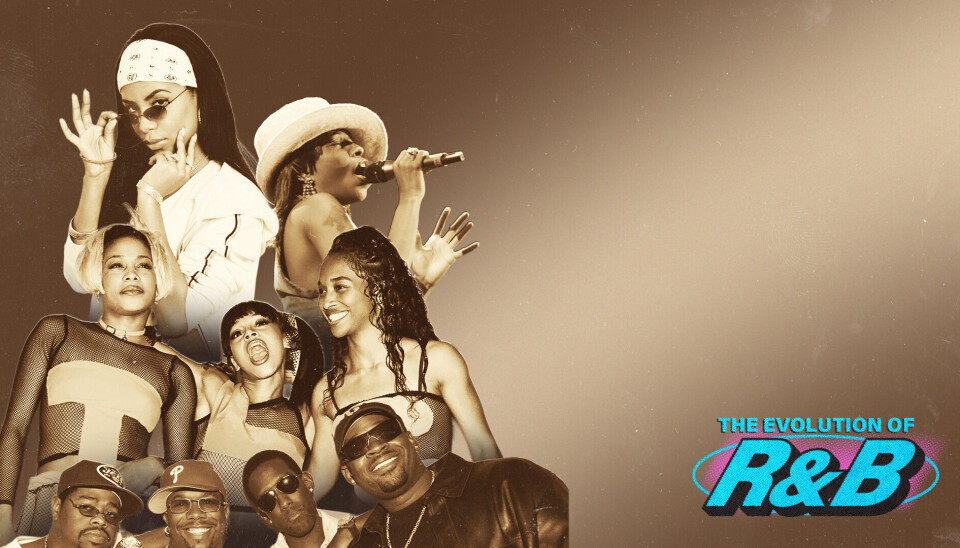
R&B groups like Boyz II Men, SWV and TLC embraced hip-hop, not only by sound, but in themes. TLC was a groundbreaking group for a number of reasons. A very noticeable double standard where male R&B singers placing focus on their sex appeal was normalized was in fact challenged when TLC hit the scene — a talented trio of women who were unabashed about their sexuality. Like their predecessors, Salt-N-Pepa, they pushed a message of female self-empowerment. They covered topics like the AIDS epidemic, drug addiction, racism, body image and more. Even their Afrofutureistic image and sounds, present in their albums CrazySexyCool and FanMail, helped propel the genre into the future as the cyber-punk sounds of Y2K became mainstream thanks to rappers like Busta Rhymes and Missy Elliott. Boyz II Men brought R&B into the mainstream fold by marrying traditional a capella harmonies and hip-hop, with hits like “End of The Road” and "I'll Make Love To You”. The group's look, which featured preppy sweaters and baseball caps, also contrasted with the mainstream tough image, which further widened their appeal. Aaliyah offered a fresh sound that would become a blueprint for alternative R&B, with her unique fusion of R&B, hip-hop and pop. She also transcended music with an influential fashion sense that featured a mix of streetwear and high fashion, a trend that many rappers and other singers have adopted since.
Music videos were a compulsory component to stardom. As R&B rose in popularity in the '90s, labels were willing to give blockbuster budgets for music videos. Television shows like MTV’s Total Request Live and Video Music Box both featured R&B and hip-hop music videos. While MTV mostly featured the most well-known videos, Video Music Box was much more interactive, allowing audiences more control over what they wanted to watch. Hype Williams was a pioneer in the R&B and hip-hop space, known for his cinematic visual techniques, from his adoption of the fish lens to his bold use of colors. Much of his work defined the look of R&B stars Aaliyah, Mary J. Blige, D’Angelo, Usher, Boyz II Men, TLC and rappers Busta Rhymes, Missy Elliott, Wu-Tang Clan, among many others. His work helped elevate music videos into a newfound art form, rather than a promotional tool. The visuals became an integral part of storytelling and artist identity.
The proliferation of R&B within the mainstream wouldn’t have happened without the push from Black television and movies. Movie soundtracks in particular from films like Waiting to Exhale, The Bodyguard, Love Jones and Brown Sugar featured prominent R&B artists. These films captured the beauty of Black joy, love and everything in between. Waiting to Exhale was also produced by R&B superproducer Babyface. The women-focused effort featured the likes of Brandy, Mary J. Blige, Toni Braxton, Aretha Franklin, Chaka Khan, Patti LaBelle and Whitney Houston (who also stars in the film) — as well as R&B female groups like TLC, SWV and For Real. The film centers around a group of four friends who navigate the shortcomings of their careers, families and romantic lives.
Another iconic Whitney Houston film, her first, was The Bodyguard, where Houston plays a singer who falls for a bodyguard, played by Kevin Costner, who is tasked with protecting her from a stalker. Houston had originally turned down numerous acting offers and accepted this role at the urging of Costner. Clive Davis, her manager at the time, convinced producers to add music to the film. And with the assistance of Babyface, LA Reid, David Foster and numerous others, The Bodyguard soundtrack is considered a pure Whitney Houston album as she commands a majority of the tracks. The film went on to gross over $400 million at the box office, and the soundtrack is still the best-selling soundtrack of all time.
Black sitcoms in particular, like Martin, Living Single, The Jamie Foxx Show and others often featured R&B artist cameos, which were always moments that warranted the signature TV show audience applause. Singers like Brandy, dubbed the “vocal bible”, had her own show, Moesha, which had several prominent guest stars throughout its 5-year run, like Usher, Ginuwine and DMX. The Fresh Prince of Bel Air, which starred actor-rapper Will Smith, also boasted appearances by Boyz II Men and Bel Biv DeVoe. Jodeci made an appearance on Martin, while TLC was featured in an episode of Living Single. This era of television had sitcoms that captured the Black experience and became seared into pop culture. Black sitcoms understood the crossover appeal of having media centered on the lives of Black people, especially as it pertained to what they wore, how they spoke and what they listened to.
Over the past three decades, R&B’s mainstream popularity has surged and waned. The classic '90s R&B sounds that we heard on the radio don't infiltrate the charts in the same way. But thanks to the innovation of artists like Mary J. Blige, TLC and Aaliyah, R&B has evolved beyond its blues roots. A new generation of artists is disrupting the norms of who can wear the R&B artist badge of honor, and what R&B songs should sound like. Contemporary R&B offers a large shift sonically, thanks to artists like SZA, H.E.R. and Summer Walker, who can’t be pigeonholed. R&B isn’t different, nor is the genre having an “identity crisis.”
R&B’s foundation hasn’t changed — it still carries the recognizable soulful rhythm of the artists before them, as fresh themes and storytelling continue to capture broader audiences.