From the Harlem Renaissance to Virgil Abloh’s colorful runway, Black designers have created the foundation for fashion. But why is credit always a day late and a dollar short?
Aleia WoodsAleiaWoods
Photos left to right by Michael Loccisano/GA/The Hollywood Reporter, Dimitrios Kambouris/Getty Images, Karwai Tang/Getty Images, and Cindy Ord/MG23/Getty Images. Photo illustration by Okayplayer.
New York Fashion Week has always placed a major focus on trendsetters and those who get the credit, whether it be fashion houses, designers, stylists, and more recently, influencers. But when looking into the mirror of fashion culture, the reflection looking back is often Black creatives. From the renowned self-expressive fashions during the Harlem Renaissance that redefined elegance, to Dapper Dan’s fearless take on luxury logos, to streetwear that created a new mold for fashion globally, Black designers, stylists, models and cultural tastemakers are the DNA of fashion. Yet despite the clear obvious influence of Black creativity, the fashion industry unapologetically borrows from these legacies, while gatekeeping persists and appropriation struts down the runway.
During the second week of September designers, models, stylists, influencers, photographers, and fans from all walks of life pack out runways in Manhattan to showcase garments expected to shape the forthcoming season in fashion. Meanwhile, the blueprints of Black creativity are etched across these stages and throughout these showrooms. Black style has never been a supporting character; it has been the character. Yet the question remains: why does the industry continue to borrow from Black artistry, while keeping Black designers on the sidelines of the very conversations they initiated?
The Harlem Renaissance was both a literary and musical movement, as well as a style revolution. In the 1920s, Harlem became the center of a new cultural identity, where style of dress became synonymous with liberation. Clothing was more than just a beautifully designed piece, it spawned its own identity, claiming space in a society set out to erase Black talent and creativity. It gave rise to designers like Zelda Wynn Valdes and Ann Lowe, and created visibility for Black dandyism: men in sharp tailoring, wide-brimmed hats, silk ties and polished shoes who used fashion to defy stereotypes and assert individuality.
Valdes, the very first Black designer to own a boutique in New York City, understood this concept quite well, becoming the go-to designer of chic and daring gowns for pioneering ladies like Josephine Baker, Dorothy Dandridge and Eartha Kitt. The iconic trailblazer even designed the Playboy Bunny costume, expanding her reach to American mainstream fashion. Meanwhile, Lowe, credited as one of the first African American fashion designers, made groundbreaking moves of her own in the 1950s when she designed Jacqueline Bouvier’s — later Jackie Kennedy — wedding gown for her nuptials to John F. Kennedy. This is regarded as a milestone in fashion, yet Lowe was initially not credited for her work. This moment is just one reminder of the ongoing erasure of Black women creatives from landmark chapters in America’s fashion story.
Advertisement
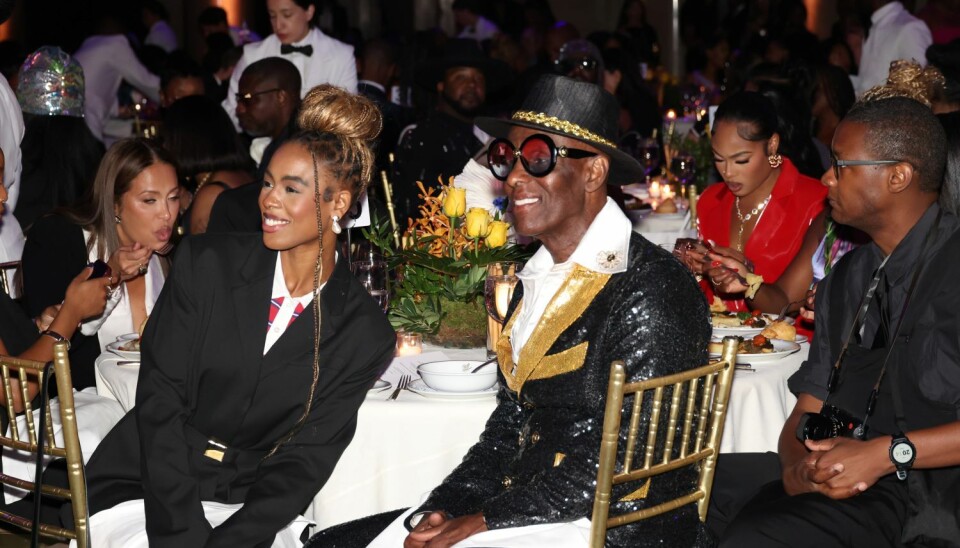
Dapper Dan attends the 18th Annual Harlem's Fashion Row Fashion Show & Style Awards on September 09, 2025 in New York City.Photo by Johnny Nunez/WireImage.
Harlem took fashion matters back into their own hands in the 1980s, thanks to Daniel “Dapper Dan” Day. His design studio in the heart of Harlem, on 125th Street, became the creative epicenter for a new era of luxury, a fusion of hip-hop culture and the city’s spirit. His reimagined takes on Gucci, Louis Vuitton and Fendi, placing their logos on his handcrafted designs, tracksuits, oversized jackets, furs and more, with his pieces becoming status symbols for rappers, athletes, and hustlers alike.
While high-end fashion houses wrote off Dapper Dan’s designs as knock-offs, to his community, the creations were sheer genius. More than just replicating brand logos, there was nuance and intention to his approach, and Dan and his team would reconstruct pieces into something bold, audacious and unapologetically Black. Unfortunately, the fashion industry didn’t view his creativity from the same lens as us, and instead systematically dismantled his efforts through litigation and several search and seizure raids, forcing Dan to close his shop in 1992.
Twenty-five years later, Gucci would debut a jacket nearly identical to one of Dapper Dan’s creations. The backlash was resounding; a luxury brand that once condemned his work, was now accused of stealing it. Following the public scrutiny, Gucci would ultimately partner with Dapper Dan, a triumph of vindication for the designer and proof that Black creatives are at the core of fashion.
With time, the industry has offered occasional nods to Black designers, albeit not on a scale of which many actually deserve. When Virgil Abloh was named Artistic Director of Louis Vuitton menswear in 2018, it was a historic moment. For the first time ever, a Black man was at the helm of one of the most powerful fashion houses in the world. During his debut show, Virgil brought his imagination to life, setting an indelible tone for Black fashion in the global luxury world.
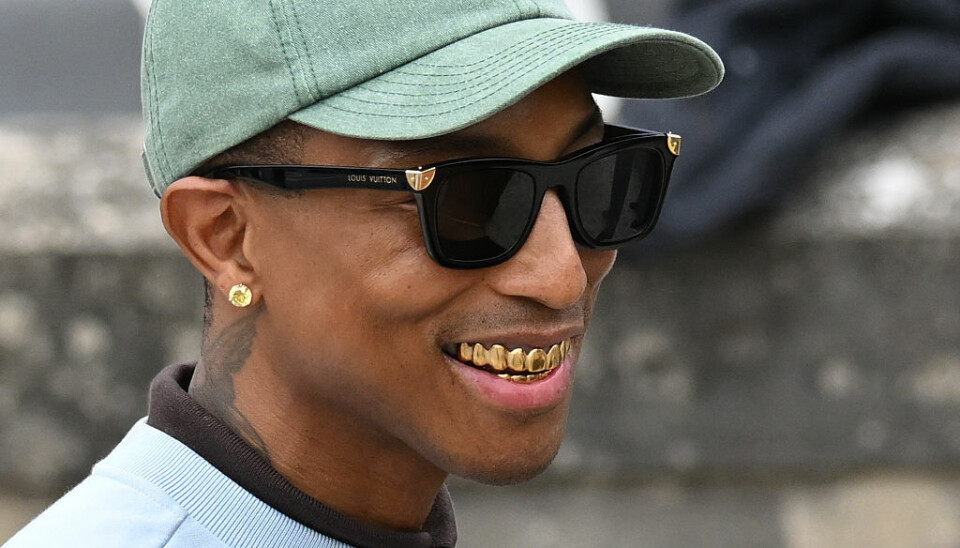
Virgil Abloh’s untimely passing in 2021 left a massive void in the fashion community, but his legacy paved a path for others to follow. Succeeding him as the Artistic Director of LV was Pharrell Williams, who has seamlessly integrated his hip-hop sensibility into the European brand’s identity. In 2022, Maximilian Davis followed Virgil’s blueprint, becoming the Creative Director of Salvatore Ferragamo. Davis’ stylings incorporate clean lines, bold colors and a feel that is a clear nod to the Black aesthetic. While these landmark appointments are absolute milestones, they are still rare.
Pharrell Williams attends the Dior Homme Menswear Spring/Summer 2026 show as part of Paris Fashion Week on June 27, 2025 in Paris, France.Photo by Stephane Cardinale - Corbis/Corbis via Getty Images.
Black fashion, like hip-hop, has broken through the confines of small-scale recognitions, and in more recent years, celebrities have either been enlisted as muses or ambassadors for brands, giving them decision-making autonomy. In 2023, Future collaborated with Paris-based luxury brand Lanvin on a unisex capsule collection, bridging the worlds of hip-hop and couture. Beyoncé, the ultimate multihyphenate, unleashed her own clothing and sneaker line, named Ivy Park, with Adidas, in 2016 and relaunched it in 2020, reaffirming the power of a Black woman in the athleisure space. Three years later, Rihanna expanded on Bey’s handbook, launching the clothing sector of Fenty under Louis Vuitton Moet Hennessy (LVMH), which was and remains a historic moment for a Black woman.
Today, it is disheartening that there are still Black “firsts”—in Rihanna’s case, she was the first Black woman to have a clothing empire under the umbrella of the largest and oldest fashion houses, a French luxury goods conglomerate that owns over 75 distinguished brands across six sectors, including fashion and leather goods, wines and spirits, perfumes and cosmetics, watches and jewelry, and more. Yet, these power moves are important because they force a shift in the balance of authorship. Influence extends to ownership and ideas are materialized on a much larger scale, and Black culture is no longer a mere inspiration that can just be stolen.
That said, visibility doesn’t necessarily equate respect. For years, styles that were birthed within Black communities that were initially stigmatized and characterized as “ghetto” have been repackaged for mainstream consumption and consumership. Cornrows were considered “unprofessional” at one point until it was later rebranded as “boxer braids.” Timberlands and Nike Air Force 1s, both staples of Black streetwear popularized in New York City, are now marketed as essentials in high-end boutiques. Air Force 1s, in particular, are regionally referred to as “Uptowns” because they are largely worn by people in Harlem, and a crispy, unblemished pair was viewed as a symbol of elegance. Now, Forces are commonly worn by other cultures, and mangled pairs are actually produced by brands for mass consumption.
The obstacles the Black community has faced in fashion aren’t just cultural. They’re systemic. Fashion has always worn gatekeeping on its shoulders. In May 2025, The Cut reported that Black designers have been noticeably absent from the Met Gala’s red carpet for a large part of its 77-year history. The issue isn’t talent, but resources; independent designers rarely have the teams, budgets or PR backing as opposed to much larger and established fashion houses. Stylists and publicists typically gravitate towards marquee names, leaving Black designers to secure visibility for their culture-shaping work on their own. With the common sentiment that stylists and designers are often celebrated in hindsight, the 2025 Met Gala put forth an effort to align the impact of Black fashion with the red carpet with its theme: Superfine: Tailoring Black Style.
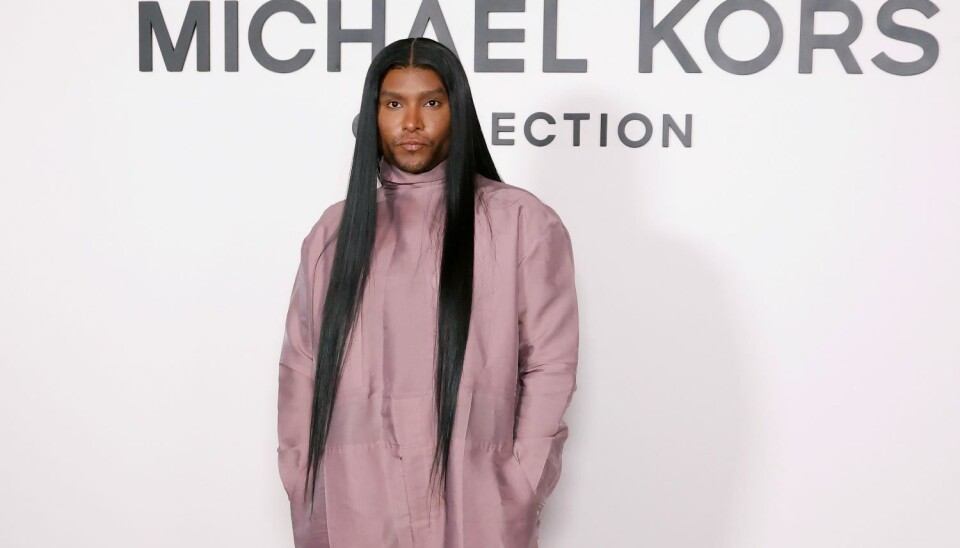
Still, this one moment doesn’t make up for generations of “borrowing” without acknowledgement. Fashion stylist Law Roach spoke on the fashion industry’s relationship with Black stylists, designers and artists now, compared to the past, saying it all boils down to opportunity, which is something Black creatives aren’t given. “The fashion industry has to have a relationship with Black stylists and Black designers and Black creators—period,” he told Business Insider in 2023. “I think that we've come to a place where — and I hate to say it this way, but I don't know how else to say it — we've proven ourselves. So I think the obvious answer is opportunity, because we've always known that the talent has been there. It's just that no one was giving us the opportunity to really show it.”
Law Roach attends the S/S 2026 Michael Kors fashion show during New York Fashion Week at Terminal Warehouse on September 11, 2025 in New York City.Photo by Taylor Hill/WireImage.
A new generation of Black designers are now refusing to wait for the industry’s approval. Aurora James, founder of luxury accessories line Brother Vellies, launched the Fifteen Percent Pledge to hold retailers accountable for investing and stocking on Black-owned brands. Tracy Reese built Hope for Flowers as both a sustainable clothing brand as well as a tool for Detroit’s cultural revival. And Kerby Jean-Raymond, founder of Pyer Moss, turned the runway into a political stage, placing Black history front and center.
Designers like LaQuan Smith and Christopher John Rogers push bold shapes, rich colors and fearless textures, carrying resilience that mirrors Zelda Wynn Valdes and Ann Lowe. They’re not just designing clothes, they’re redefining the boundaries of fashion.
Black designers, stylists and models have never been on the outskirts of fashion’s story; in fact, they are the story. From Harlem ballrooms to Paris’ annual fashion week, from Dapper Dan’s boutique to Virgil Abloh’s rainbow runway, every era has been shaped in part by the visions of Black creatives. But applause without opportunity won’t suffice. The change that begs to be seen, whether it is through more funding and support, more leadership at heritage houses, and less retroactive praise.
Fashion is much bigger than clothes, patterns, shapes and colors. It has long been about power, who receives it, who benefits from it and who gets the credit. And if the industry continues to “adopt” without investing back, the truth must be confronted, one that boldly states that innovation cannot exist without its source of inspiration.